






RetuRO: Impact analysis shows the Deposit-Return System generated 1.49 billion lei in economic effects in 2024
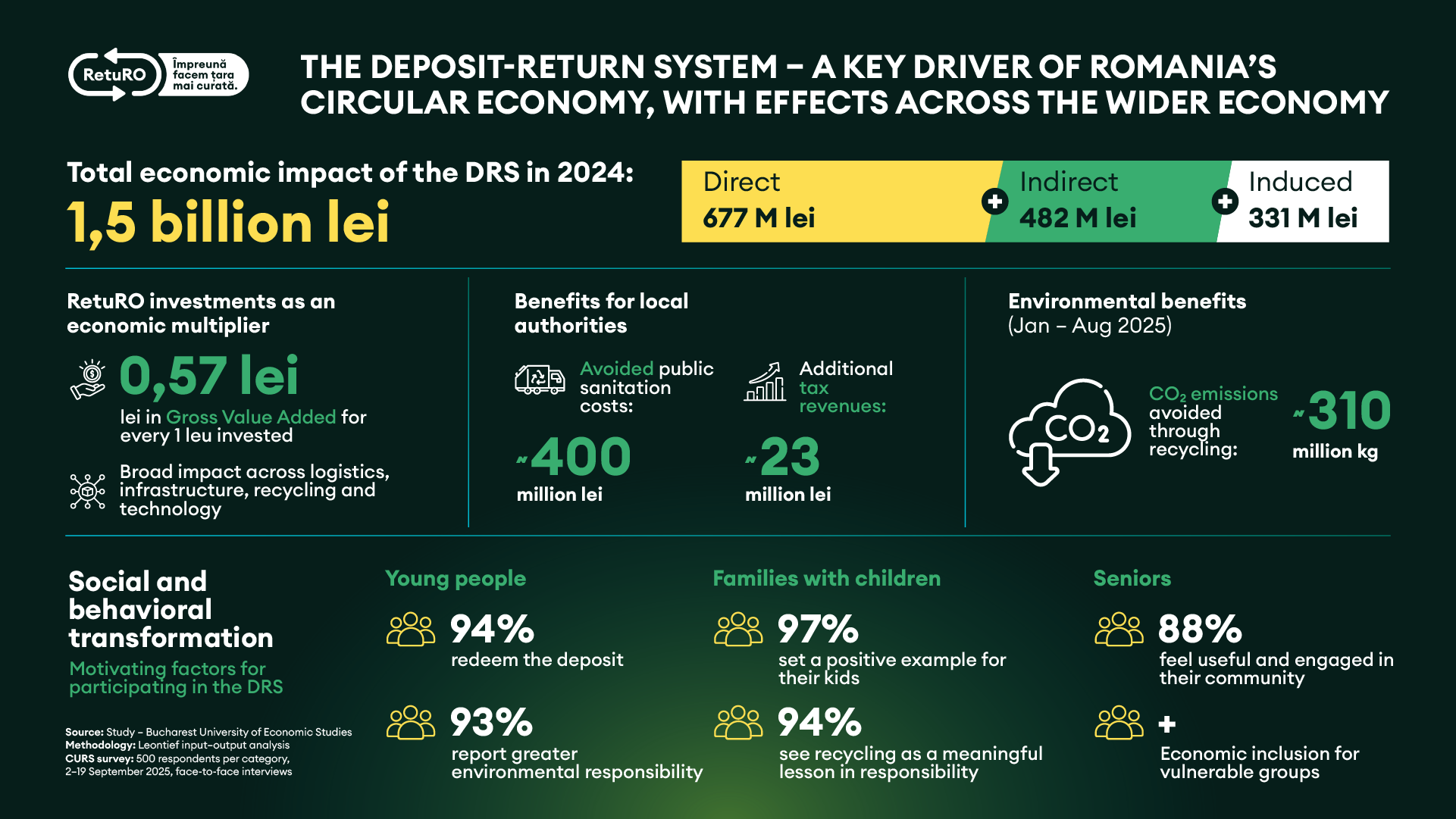
The Deposit-Return System (DRS) administered by RetuRO produced a total economic impact of 1.49 billion lei in 2024, according to a study by the Bucharest University of Economic Studies. The combined direct, indirect and induced contributions position the system as one of Romania’s most substantial circular-economy mechanisms, activating producers, retailers, recyclers and local administrations across the national value chain.
Direct contribution amounted to 677.8 million lei, driven by operations and infrastructure investments, confirming RetuRO’s role as a relevant economic actor. Indirect effects, estimated at 482.42 million lei, reflect upstream activity triggered through procurement of transport, equipment, IT services and maintenance. Induced contribution, reaching 331.26 million lei, highlights the broader economic demand created by household consumption among employees within the system and its suppliers.
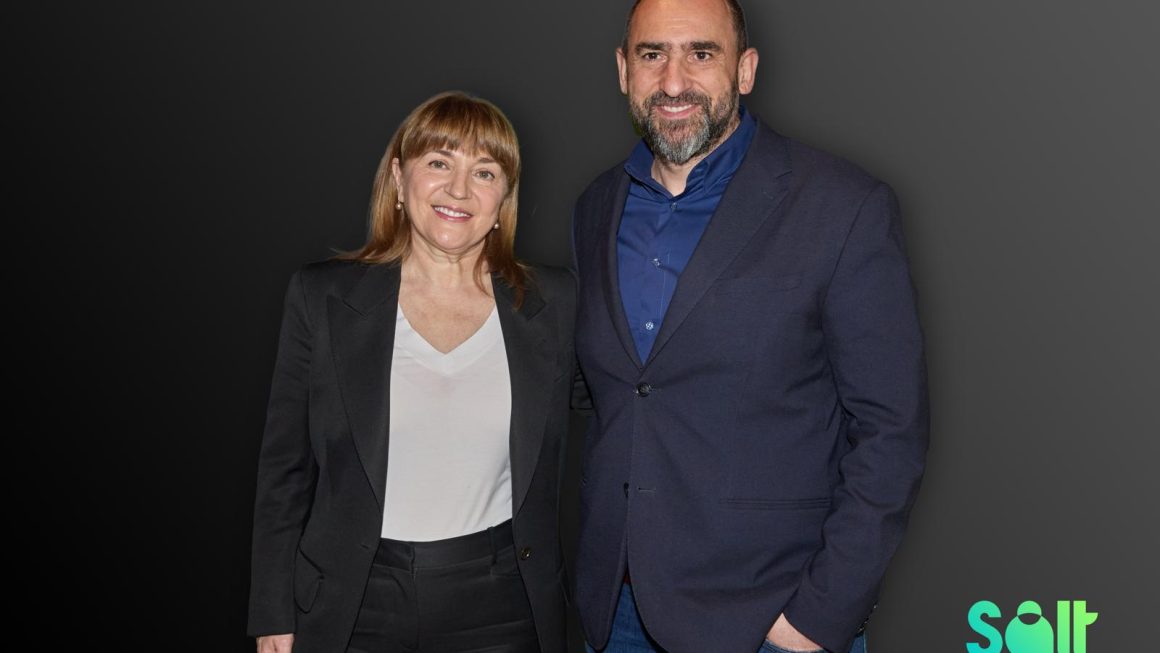
“The socio-economic impact study provides a clear and documented picture of how the system reshapes the economy, local communities and behaviours,” said Gemma Webb, CEO of RetuRO.
At macroeconomic level, SGR contributes 0.085% to Romania’s GDP. The investment multiplier of 0.57 lei of additional gross value added for each invested leu confirms the long-term economic efficiency of the system. As collection volumes mature and recycling capacities expand, total impact is expected to continue rising.
Societal impact is also significant, with SGR reinforcing sustainable behaviours and long-term habits. Younger participants are motivated by both financial recovery and environmental concern, families view the system as an educational tool, and seniors show high behavioural discipline. For vulnerable groups, SGR offers a stable source of legal economic activity.
Environmental benefits are notable: between January and August 2025, glass recycling reduced almost 110 million kg of CO₂, metal nearly 6 million kg, and plastic over 194 million kg of CO₂. Local authorities gain from approximately 400 million lei in avoided sanitation costs and around 23 million lei in additional tax revenue.
SGR is becoming a structural pillar of Romania’s circular economy, delivering measurable economic value, societal transformation and substantial environmental gains.
Related Posts
Genesis Property Appoints Cătălin Niculiță as Leasing Manager to Support the Occupancy Strategy of the West Gate Campus

International Investor Enters Bucharest Office Market Through @Expo Campus Acquisition